Apps and Trends to Watch: AppRefinery’s consumer app trends shaping 2026
The app industry moves quickly. This year, we are already seeing consumer app trends shifting in ways that directly impact retention, engagement, and monetization. Across categories, from music and dating to education and media, leading apps are embedding deeper social features, advanced retention mechanics, and more purposeful AI functionality. These shifts signal where mobile app growth is heading next.
In this installment of the Apps and Trends to Watch series, I’m stepping back from app-by-app analysis and category overviews to look at the feature design moves that gained momentum in 2025 and the three trends to watch this year.
Let’s jump in!
What are the key consumer trends for 2026?
I believe the three major trends shaping 2026 are:
- Social features becoming foundational retention drivers
- Advanced retention mechanics
- AI evolving from a novelty to an embedded, context-aware utility
Looking for more exclusive insights into drivers of app growth? Schedule a free demo with AppRefinery today.
Social features become foundational retention drivers
Across categories, social functionality is no longer just a differentiator; it’s increasingly being treated as a foundational way to reinforce user motivation. This can take many forms, such as connection, collaboration, competition, or shared progress, but the common thread is that apps are attaching interpersonal meaning to actions that were once purely solitary. Even categories not traditionally defined by community dynamics are incorporating these elements, while apps already built around interaction are finding new ways to deepen that dimension.
For example, Spotify introduced a direct messaging feature on August 26, 2025, allowing users aged 16+ to send direct messages and share music, podcasts, and audiobooks within the app.
While messaging itself is not a groundbreaking feature, it signals a shift in how Spotify approaches social interaction. Unlike its existing collaborative tools, such as Jam and Blend, which focus on shared listening experiences, messaging centers on something more direct: connection. Music has always been inherently social, but on Spotify, that interaction typically lived on external platforms. With messaging, Spotify is not trying to become a chat app. Instead, it is closing the gap between private listening and public conversation, bringing music-driven connection back into the product experience.tructured daily habit.
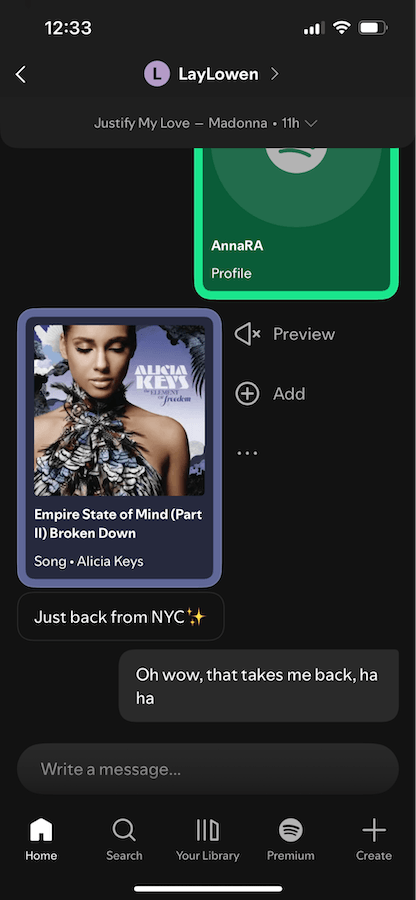
Spotify: Sharing music in a Spotify DM thread enables a smooth transition from listening to a conversation surface and back.
Another example: Tinder’s Double Date feature. While dating is an inherently social activity, many dating apps have opted to keep that dimension strictly between matched users. Tinder’s Double Date feature points to another way social is expanding: layering collaboration onto an experience that has historically been solitary and high-pressure. Double Date turns swiping into a paired activity, making the experience feel closer to real-world group dynamics while keeping the interaction within the app.
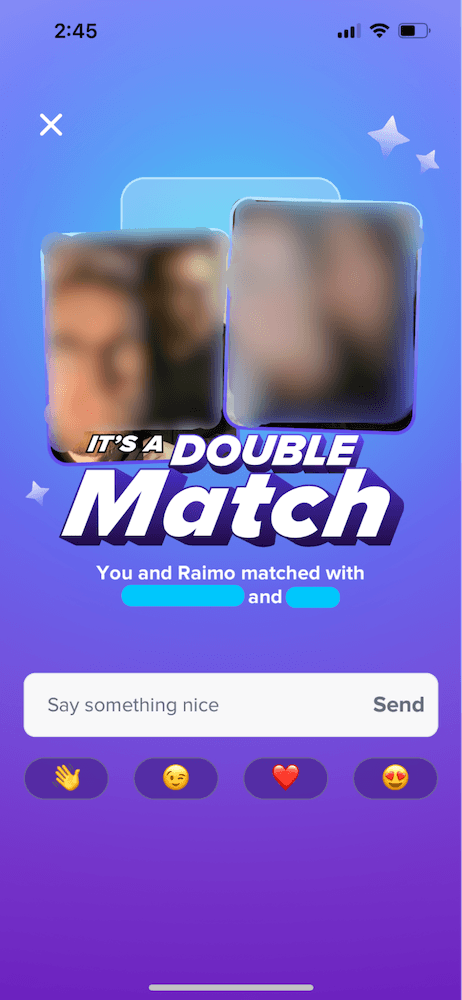
Tinder’s Double Date feature reframes swiping as a collaborative mode.
Moreover, Duolingo’s Chess PvP addition shows a third way the expansion of social elements can unfold: direct competition. While the addition of chess broadens Duolingo’s content and highlights its continued investment in game-inspired design, it also introduces direct PvP alongside its existing league system. Competition is inherent to chess, but similar social elements in various forms are something I anticipate seeing more of in consumer apps in 2026.
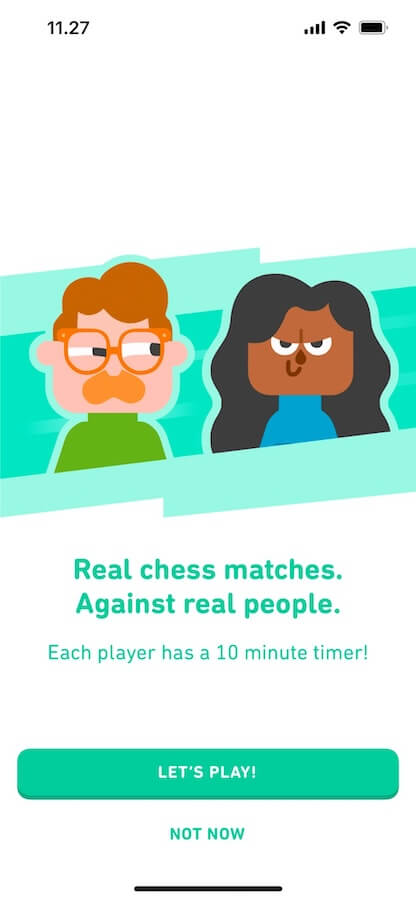
Chess PvP adds direct competition on top of Duolingo’s existing league framework.
What does this mean for app marketers?
As social experiences expand inside traditionally non-social categories, marketers may gain more native hooks for acquisition and retention messaging. Collaborative modes, direct competition, and in-app communication features present an opportunity for clearer creative angles, such as “Play together,” “Compete with friends,” “Share instantly”, and support referral-driven growth.
More importantly, when social motivation is embedded in the product, marketers can align campaigns with connection, collaboration, or competition rather than relying purely on feature-led messaging.
Advanced retention mechanics
Retention design is playing a growing role in competitive differentiation across consumer apps. Subscription fatigue is real, and user attention is fragmented. As a result, apps are competing more aggressively on how well they can build a predictable return habit, not just a one-time conversion.
In 2026, I expect to see more of these advanced retention and engagement mechanics spread because they solve a very specific problem: they offer blueprints for translating abstract value into structured action. The challenge is implementing these powerful mechanics in a non-intrusive, category-appropriate way. I’m already seeing streaks, tasks, and currency systems appear across consumer apps, but more complex LiveOps, collection, and progression systems are only just emerging.
To pull another example from Duolingo, their limited-time Genshin Impact collaboration event (Dec 8–27, 2025) required learners to maintain a three-day learning streak to earn in-game rewards, signaling how education apps are borrowing advanced retention systems from games to increase habitual engagement.
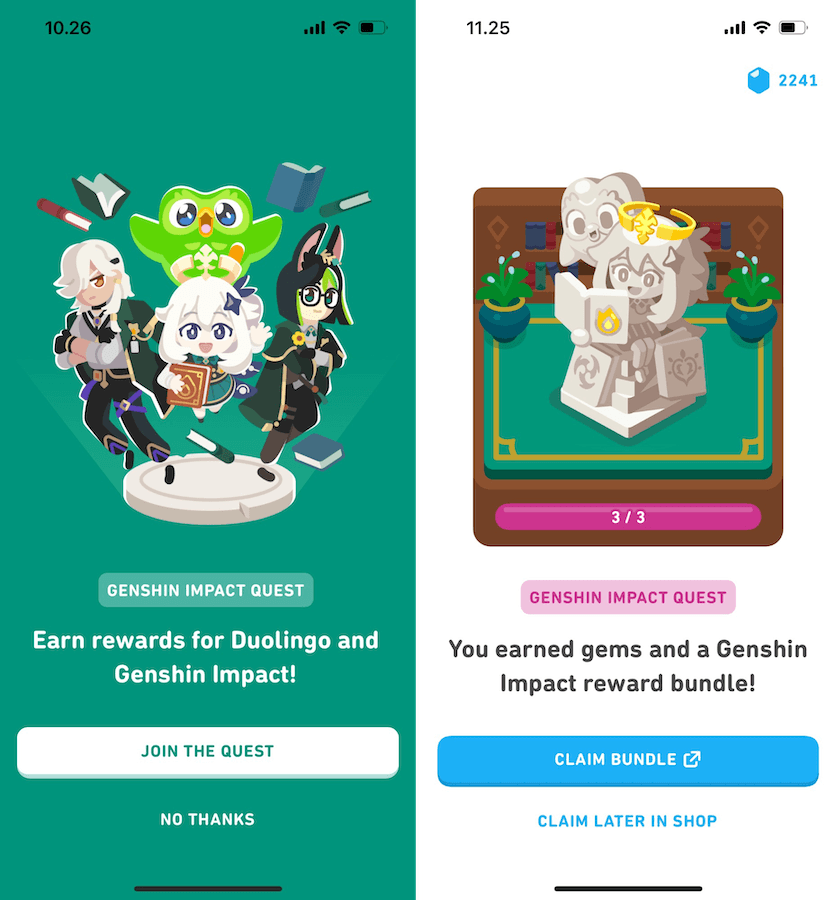
Duolingo: Limited-time collaboration quest uses LiveOps structure familiar from gaming apps.
In a similar vein, ReelShort’s Collectible Card Album demonstrates how game mechanics can be used to impact media consumption. The feature is built around a limited-time collection event where users complete tasks to obtain cards and fill albums for rewards — a very familiar engagement loop from casual gaming apps.
The structure is unmistakably game-inspired: a gacha-like pull mechanic, daily refreshing tasks that unlock more pulls, and collection rewards that turn completion into status and payoff. This pattern reframes viewing behavior as a means to progress toward a collection goal, giving users an ongoing but event-bound, daily incentive to return to the app.
One likely implication for 2026 is that this style of retention design will continue to migrate into consumer app categories, particularly when it supports session frequency and extends engagement across defined event windows.
What does this mean for app marketers?
For marketers, the spread of these advanced retention mechanics changes how lifecycle and user acquisition strategies can be structured. Limited-time events, collection systems, and structured progression provide natural re-engagement beats and campaign windows.
When products adopt LiveOps-style energy, marketers can coordinate creative refreshes, reactivation pushes, and segmentation strategies around predictable in-app moments rather than generic “come back” messaging.
AI as an embedded utility
AI has dominated product conversations for the past two years, but what is interesting is where the competitive edge is found. In 2026, I believe that edge will emerge for apps that make AI feel like an integrated product advantage: measurably time-saving and adding specialized, tangible value to active users.
To prevent users from gravitating to AI chatbots like ChatGPT for study purposes, education apps and study companions are seeking ways to integrate AI in more compelling, interactive ways.
AI-native Gauth’s recently added Study Converter and Live Tutor are strong examples of this. Instead of only providing users with correct answers, these features convert raw teaching materials into flip cards, quizzes, and structured tutoring sessions that support independent and interactive study. Similarly, Duolingo’s Explain My Answer (recently made available to all users), Video Call, and Roleplay features also represent a focused approach to smart AI integration.
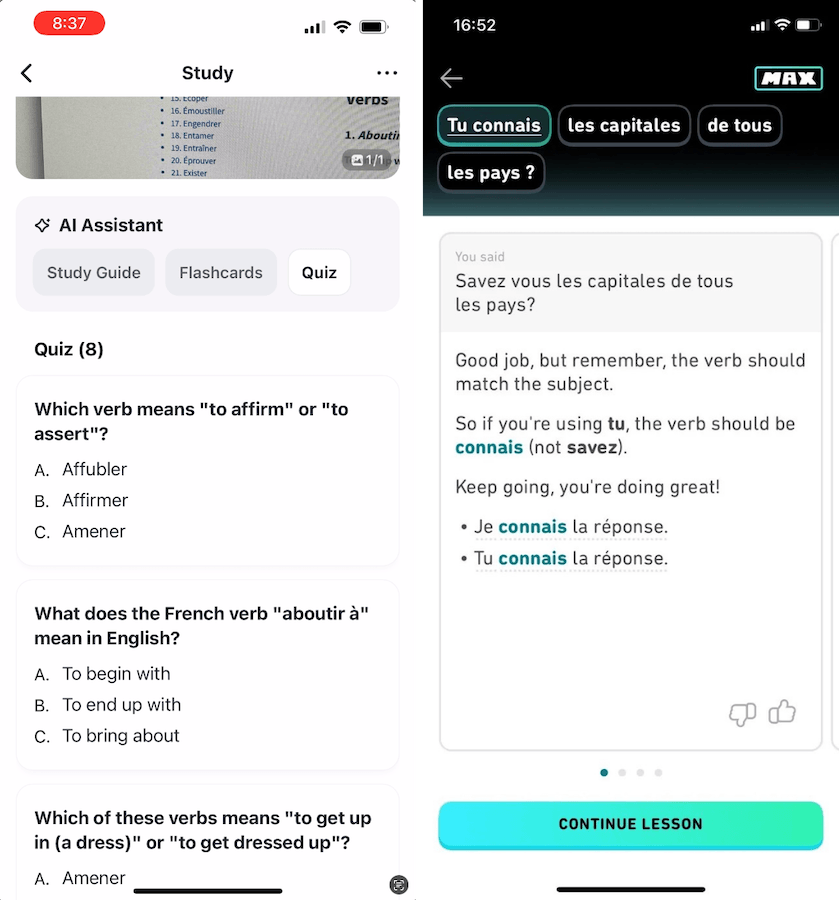
Gauth’s Study Converter turns captured content into quizzes, flashcards, and study guides, and Duolingo’s Explain My Answer gives detailed feedback on incorrect answers.
Elsewhere, AllTrails has introduced the AI-powered Trail Conditions, Community Heatmap, and Outdoor Lens as enhancements specifically relevant to the outdoor exploration context, blazing the trail for more thoughtful AI implementation in 2026.
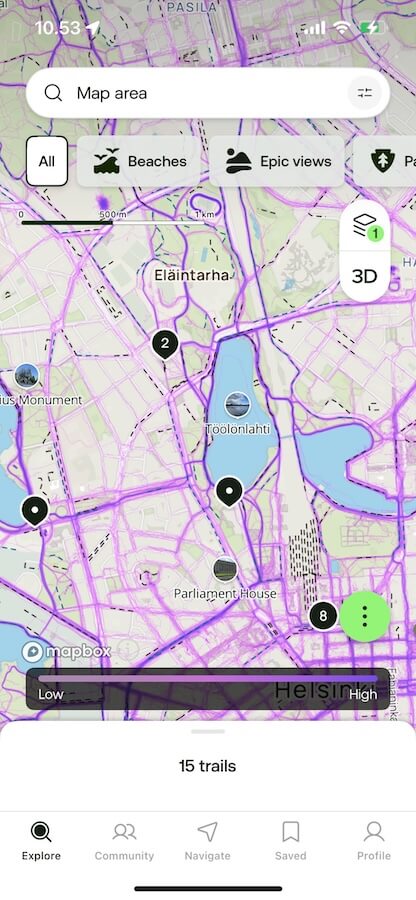
AllTrails’ Community Heatmap
What does this mean for marketers?
As AI shifts from novelty to embedded utility, marketers may need to move away from broad “AI-powered” messaging and toward use-case clarity. When AI meaningfully saves time or deepens outcomes, campaigns can focus on tangible user benefits instead of technological buzzwords.
Apps that integrate AI in a context-aware way may also unlock higher-intent acquisition segments, because the value proposition becomes more specific and defensible.
A shift toward more mature feature design
To recap, app marketers can likely expect to see more consumer apps to treat connection, collaboration, and competition as foundational social motivations they can intentionally design for, rather than optional add-ons that sit at the edges of the experience.
Until now, I have seen some bold moves in introducing advanced retention and engagement features familiar from gaming apps, and this year, I look forward to seeing more and more consumer apps find category-appropriate ways to borrow these mechanics without making the product feel intrusive or exhausting.
And, in the rush to implement AI, the winners in 2026 will be the apps that design features that genuinely save time, deepen understanding, and add specialized, context-aware value.