In the Age of AI, Creative Taste Is the Last True Moat
There’s a question haunting almost every creative team in mobile marketing right now, and most people are too polite to say it out loud: Are we actually doing this better with AI, or are we just doing more of it?
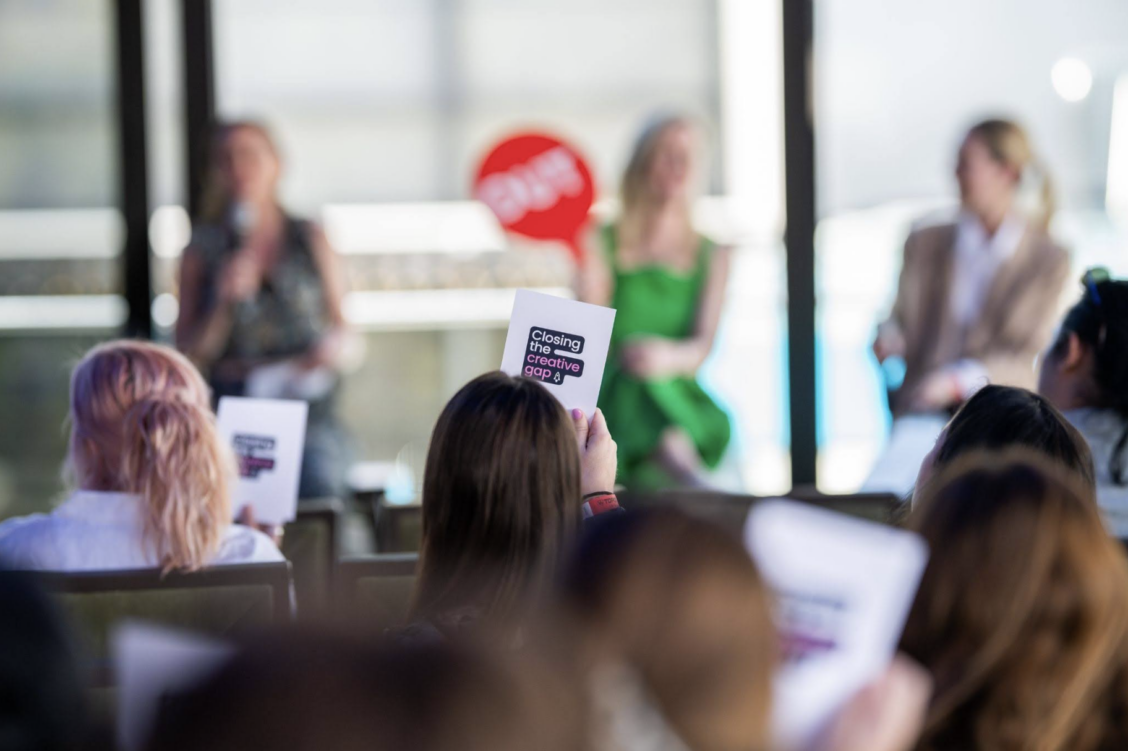
At MAU 2026, Liftoff brought together mobile practitioners from Singular and Underdog to ask it directly. The panel — moderated by Casie Jordan of Liftoff, with Singular Chief Marketing Officer, Stephanie Pilon of and Underdog Director of Digital Performance Marketing, Kaylee Wilmovsky — tackled a series of mobile marketing realities, big bets, and hot takes to explore what’s “in” and what’s “out” in AI creative.
Here were their biggest takeaways.
1. Most teams are undertesting, and the gap is bigger than anyone wants to admit
When it comes to A/B testing, the panel didn’t mince words: most teams are running too few variations, and the ones doing it right are operating at a scale that would surprise most marketers. According to an upcoming report from Singular, the top quartile of advertisers is launching more than 50 creative variations a week, with the upper end of the scale running somewhere between 5,000 and 10,000 active creatives at any given time.
Wilmovsky pointed to the classic blue-versus-red test as a case study in the problem: it’s only as useful as the conditions around it. Run it without enough budget or time behind the asset, and you’re not learning anything, you’re generating the feeling of rigor without the substance of it.
She also added the correlation between spend and creative volume is real, meaning the teams operating at lower budgets face a structural disadvantage. The answer isn’t to run more variations on the cheap — it’s to be ruthlessly intentional about what you’re actually trying to learn from each one.
Volume without intention is just noise.
2. The Creative Director role isn’t going anywhere, but it is changing
On the question of whether creative teams still need a Creative Director at all, panelists agreed the role isn’t disappearing, but diverged on what it’s actually becoming.
“It’s evolving toward strategy and taste that can’t be replaced.” said Wilmovsky.
The emerging consensus: the creative director of 2026 is less executor and more orchestrator. AI handles the output layer, generating volume, iterating on performance signals, producing platform-native variants. What it can’t replicate is a genuine point of view. The creative director, in the age of AI is the person who holds that point of view and uses it to direct the system.
Pilon connected this directly to how teams are hiring. “Taste can’t be learned the way tech can,” she said. “And tools are changing too fast for technical fluency to be a sustainable thing to hire for.”
What the panel agreed teams actually need in 2026: curiosity, critical thinking, and most importantly, the judgment to know when AI is elevating the work versus quietly eroding what was distinctive about it. That last capability is the hardest to interview for, and possibly the most important.
3. “Human-made” is already a contested term that most teams aren’t ready for
On the idea of running a campaign with zero human-made creative, both panelists and attendees unanimously pushed back on the premise before engaging with the question.
“Define human-made,” Wilmovsky said.
A smart observation, as the definition is genuinely blurry. If a person wrote the prompt, directed the output, and approved the final asset, is that “human-made”? Interestingly, the panel had a hard time answering one way or the other.
What they did agree on: the uncanny valley problem is real, and teams pushing hardest on fully AI-generated campaigns are feeling it. AI creative can throw audiences off in ways that are hard to articulate. And that gap, however narrow it’s getting, still matters for performance.
Pilon’s reframe was the one that stuck: the best teams have stopped asking whether AI made it and started asking whether it shows up in a way that’s native to the platform and genuine to the audience.
“Great creative looks platform-native,” Wilmovsky said. “It’s about showing up on each channel in the way that feels most organic to that user base.”
The session ended with a rapid-fire round. What to stop doing? Running creative tests without the budget or conviction to actually learn from them. What to double down on? Systems that compound over time, rather than campaigns that reset to zero every quarter.
The implicit argument underneath all of it: the teams pulling ahead aren’t the ones with the best AI tools. They’re the ones who’ve built the judgment to use them well.
For more on this topic, keep an eye out for our soon-to-be-released whitepaper, Creative in the AI era: Why your best creative isn’t winning anymore or ask your account manager for an intro to Liftoff Creative.